October 18, 2026
Does AI Know Your Business Exists? How to Navigate AI SEO and What to Fix First
Missing from AI answers? Learn the four reasons AI leaves a brand out, how to find which one applies to you, and where to start with AI SEO.
Your buyers are changing how they shop. Instead of typing a few words into Google and clicking through a page of links, more of them now ask an AI tool a full question, such as 'What's the best invoicing software for a small agency in Sydney?', and take the shortlist it gives them.
If you've tried this yourself, you may have noticed something uncomfortable. Your competitors get named. Your brand doesn't.
Most marketing teams react the same way. They publish more: more blog posts, more landing pages, more 'ultimate guides'. Often it changes nothing, because content was never the problem.
AI SEO (also called GEO, or generative engine optimisation) is the work of making sure AI tools can read your content, describe you correctly, see you mentioned on websites they trust and feel confident recommending you. When a brand goes missing from AI answers, one of those four things has broken. This guide shows you how to work out which one before you spend time or budget on the wrong fix. You don't need any background in AI SEO to follow along.
Why Your Brand Might Be Missing From AI Search Answers
AI search doesn't work like the results page you're used to. There's no page two. The buyer gets one written answer naming a handful of brands, and often stops there. Pew Research Center tracked 68,879 Google searches and found that when an AI summary appeared, people clicked a regular result on 8% of visits, compared with 15% without one. Only 1% clicked a link inside the summary (Pew Research Center, 2025).
The hard part is that you rarely find out. Your analytics won't show a visit that never happened. Many brands only notice when a sales call starts with 'We looked at a few options AI suggested', and theirs wasn't one of them.
Being known to AI isn't the same as being suggested by it, either. In a study of 150 brands, search agency Victorious found that AI described 96% of them accurately, yet 89% never appeared in the AI answers it measured (Victorious, 2026). Strong Google rankings don't guarantee a place either. Plenty of brands sit on page one and still don't show up in AI answers.
So when marketers search for how to appear in AI search, or type 'how to get my business on ChatGPT', the honest answer is that it depends on why you're missing.
Why Publishing More Content Usually Isn't the Answer
Publishing more worked for years in traditional SEO. AI recommendations work differently. AI mostly learns which brands to suggest from what other websites say about them, not from what brands say about themselves.
- AirOps analysed 21,311 brand mentions across more than 500 buying-related questions and found 85% came from third-party websites. Only 13.2% came from the brands' own sites (AirOps, 2025).
- When Ahrefs looked at its own brand, it found that in up to 89% of cases it appeared in AI answers because other websites mentioned it (Ahrefs, 2026).
- In a separate Ahrefs study of 75,000 brands, the number of pages on a brand's website showed almost no link to AI visibility, while mentions across the web and on YouTube showed the strongest links (Ahrefs, 2025).
These studies come from search tool vendors, so treat the exact numbers as directional. But they point the same way: your own content is only part of the picture. And more of it can't fix a website AI can't read, a story AI has already got wrong, or review sites that never mention you. Good AI SEO starts by finding out which problem you actually have.
How to Run a Four-Step AI SEO Check on Your Brand
AI leaves a brand out for one of four reasons, and they work like a chain. AI has to read your content before it can understand you, understand you before it can connect you with what trusted websites say, and see that outside evidence before it feels confident recommending you. A break early in the chain blocks everything after it.
So check the four in order, and start with the first one that fails. This is also the honest answer to 'how to rank in AI search': there's no single position to climb, only a chain you strengthen from the first weak link. At Wordflow, we call the four stages Found, Understood, Cited and Recommended, but the plain-English checks below are all you need.
Check 1. Can AI read your website?
What goes wrong. AI tools read websites using automated programs called crawlers. If your site blocks them, hides key information behind logins, or only loads content after code runs in the browser, a crawler may see an almost empty page. When Vercel studied close to a billion monthly AI crawler requests, it found none of the major crawlers ran JavaScript (Vercel, 2024).
How to check. Ask your web developer whether your robots.txt file (which tells crawlers what they may read) blocks AI crawlers, whether key content only appears after scripts run, and whether important pages sit behind a login or form.
In Wordflow. The AI readiness check runs these checks for you and flags anything stopping AI from reading your site.
Check 2. Does AI describe you correctly?
What goes wrong. AI can read your site and still get your story wrong, putting you in the wrong category or describing a product you retired. If AI thinks you sell payroll software when you sell invoicing software, it won't suggest you for invoicing. And AI can be wrong with confidence: Columbia's Tow Center found eight AI search tools gave incorrect answers to more than 60% of 1,600 test questions (Columbia Journalism Review, 2025).
How to check. Ask a few AI tools 'What does [brand] do?' and 'Who is [brand] for?', and compare the answers with how you describe yourself. Look for the same mistake across several tools, not a single slip.
In Wordflow. Brand Narrative campaigns compare what AI says about you with your approved brand story, and show where answers drift across every engine you track.
Check 3. Do trusted websites mention you?
What goes wrong. AI leans on sources it considers reliable, such as review sites, industry publications and comparison articles. If those sources name your competitors and not you, AI has little reason to include you, however good your own website is.
How to check. Ask the questions your buyers ask without naming your brand, such as 'What's the best [category] for [type of customer] in [market]?'. Note which brands appear and which websites the answers point to. If the same sources keep coming up and none mention you, you've found your gap. Our guide to tracking AI citation sources covers this in detail.
In Wordflow. Category Visibility campaigns show how often you appear, Missed Prompts lists the questions where competitors appear and you don't, and Pages and Citations shows which websites AI relies on.
Check 4. Is AI confident enough to recommend you?
What goes wrong. Even when AI mentions you, it may hold back. You'll see this as hedging, where your brand comes with a 'but', such as 'a solid option, though some users find it limited', or you're listed behind competitors it describes more warmly.
How to check. Ask comparison questions, such as '[Your brand] or [competitor], which is better for [use case]?'. Does AI pick you, pick a rival or sit on the fence? This is where you learn how to get recommended by AI, not just mentioned. Last week's guide goes deeper on hedging.
In Wordflow. Brand Comparison campaigns track how often AI recommends you over named competitors, and how often it adds a caveat.
Wherever you first hit a clear, repeated problem, that's where your AI SEO work starts. Leave the rest of the chain for later.
A Real-World Example: The Brand Missing From the Right Websites
Take Fernlane, a fictional workflow automation company in Singapore that sells to small operations teams across Singapore, Australia and Hong Kong. Its three-person marketing team has a solid blog and decent Google rankings. But in the same month, two new customers mention they found Fernlane 'eventually', after AI had suggested two other tools first.
The team writes 20 questions their buyers would ask, such as 'What's the best workflow automation tool for a small operations team?', and runs them across several AI tools. Fernlane appears in 2 of the 20 answers. Two competitors, Orbitask and Plannery (also fictional), appear in 14 and 11.
The first instinct is to commission eight new blog posts. Instead, the team works through the four checks in order.
Can AI read the site? Their developer confirms AI crawlers aren't blocked and product and pricing pages load as plain text. No problem here.
Does AI describe Fernlane correctly? Every AI tool describes Fernlane accurately, with the right audience, features and price range. One tool gets the founding year wrong, but no other repeats it, so the team notes it and moves on. This rules out the two problems more content might have helped with.
Do trusted websites mention Fernlane? This is where the chain breaks. The same five websites keep appearing behind the answers: three software review sites and two industry publications. A typical answer reads:
'For small operations teams, Orbitask and Plannery are popular choices. Orbitask is highly rated on major software review sites for its quick setup, while Plannery is often recommended by industry publications for its integrations.'
When the team visits those sites, the picture is clear. Fernlane has an unclaimed profile with three reviews on one review site and no profile on the other two. Neither publication has mentioned it in two years. Orbitask has more than 200 reviews on each site. AI isn't ignoring Fernlane's content. It's repeating what its trusted sources say, and those sources barely know Fernlane exists.
In Wordflow's terms, this is a Cited problem, and eight new blog posts wouldn't change a word of what those five websites say. So the team builds a different plan, with an owner for each action:
- Review sites (customer marketing, this month). Claim and complete all three profiles, and ask customers for a review straight after a clear win, when they have real detail to share.
- Industry publications (head of marketing, next two months). Offer both publications customer data on how small teams automate their work, and the founder as an expert voice.
- Original research (content lead, within three months). Turn that data into a short report the publications and review sites would want to reference.
The fourth check goes on hold, because there's little point working on recommendations until AI sees Fernlane in the places it trusts. Before changing anything, the team records its starting point: 2 of 20 answers, plus how often each of the five websites is cited. In two months, they'll see whether Fernlane is appearing in answers that draw on those sites, instead of guessing.
Fernlane is fictional, but its situation mirrors the worked example in Part Three of our AI Visibility Playbook.
Two Easy Mistakes That Send Teams Fixing the Wrong Problem
Mistake 1. Assuming that if AI doesn't mention you, it can't find you
Being missing from AI answers looks like a technical problem, so teams often rush into website fixes. But absence doesn't prove AI can't reach you. In Fernlane's case, AI could read everything and describe the company accurately. It simply trusted other sources more. If your site is readable and AI describes you correctly when asked directly, your gap is far more likely to be about trusted websites than about access.
Mistake 2. Treating one wrong answer as a pattern
AI answers vary by tool, by day and by wording. AirOps found that nearly 68% of brands appeared on only one of the three AI platforms it tested (AirOps, 2025), so one answer from one tool tells you very little. Before you rewrite your messaging, check whether the same mistake appears across several tools and several versions of the question. This is why Wordflow tracks the same questions across up to 12 AI engines, depending on your plan: a one-off stands out as a one-off, and a repeated mistake shows up as a pattern worth fixing.
Before You Fix Anything, Record Where You Stand Today
Before you change anything, write down where you stand now. Think of it as a 'before' photo you can compare against later. Without it, you can't show your work made a difference, and it's much harder to make the case for more budget.
- Pick 20 to 30 questions your buyers would actually ask, mixing questions about your brand, your category and your competitors.
- Ask them across the AI tools your buyers use, and record the answers, the brands named and the websites cited.
- Record one main number for each check, using the table below.
- Keep the questions the same for at least three months, so you can compare results fairly.
A low starting score isn't a failure. It's simply where you are today. Expect 2 to 3 weeks of regular tracking before drawing conclusions, and 4 to 8 weeks before changes start to show in AI answers. Results vary by brand, category and market.
Doing this by hand every week means reading hundreds of answers. In Wordflow, your questions stay fixed and are tracked weekly, so your starting point is recorded from day one and each number builds into a trend you can show to whoever signs off your budget.
Where to Start This Week
- Run the four checks on 5 to 10 of your most important buying questions, in order, and stop at the first clear, repeated problem.
- Write down your starting point before you change anything.
- Plan two or three actions against that one problem, each with an owner and a date.
Wordflow then turns what you find into a prioritised to-do list. Because your questions stay fixed, your starting point is recorded from day one, so you can show what changed.
If you're ready to find out whether AI knows your business exists, start with Wordflow or book a demo and we'll walk you through it. To learn the full approach to AI SEO at your own pace, download the AI Visibility Playbook.
Read More
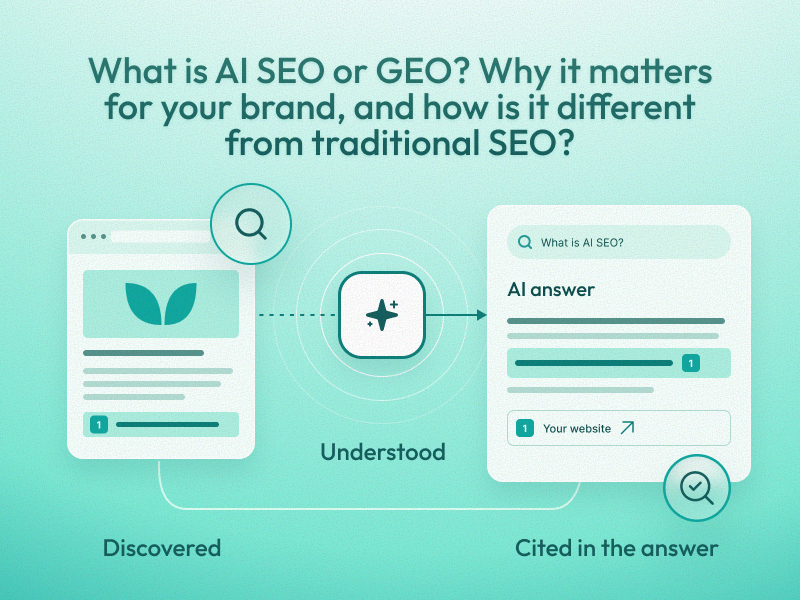
What is AI SEO or GEO? Why it matters for your brand, and how is it different from traditional SEO?
Talks about what AI SEO is, what the different terminologies mean, and how companies could utilise it.
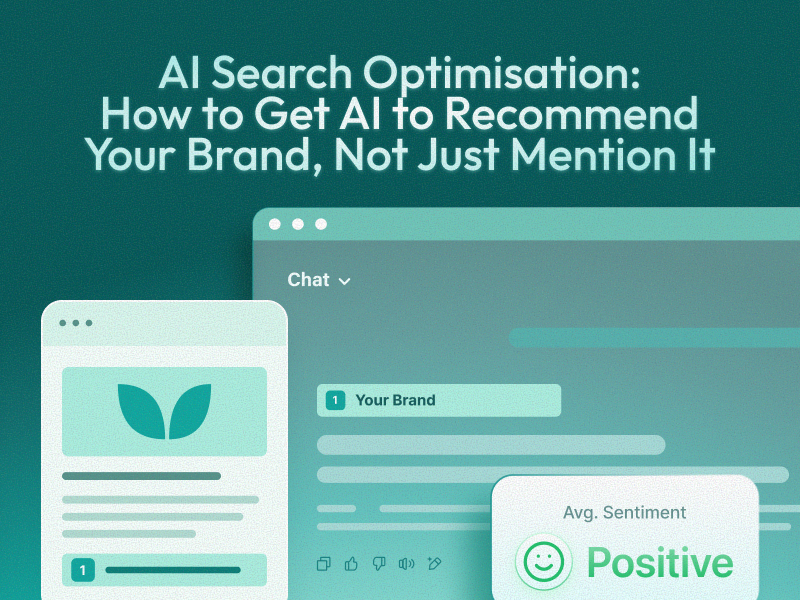
AI Search Optimisation: How to Get AI to Recommend Your Brand, Not Just Mention It
AI can mention your brand and still recommend a competitor. Learn how AI search optimisation, or AI SEO, gets your brand recommended, not just mentioned.
Does AI Know Your Business Exists? How to Navigate AI SEO and What to Fix First
Missing from AI answers? Learn the four reasons AI leaves a brand out, how to find which one applies to you, and where to start with AI SEO.
Artifical Intelligence.
Real Results
Ready to transform how you market? Start your unlimited free trial today and experience the advantage Wordflow brings to your results.