July 16, 2026
What Is GEO? The Complete Guide to Generative Engine Optimisation
Learn what GEO is, how it differs from SEO and AEO, and how to improve your brand’s visibility, mentions and citations in AI-generated answers.
For years, SEO has been built around one main goal. Earning visibility on search results pages.
That still matters. But it is no longer the whole picture.
GEO matters because AI-powered search shapes what people see and what they buy.
ChatGPT hit 100 million users faster than any app in history. Google’s AI Overviews now reach billions of users each month. What this means is simple. People are increasingly turning to AI for product recommendations, research, comparisons, and shortlist decisions.
Instead of scanning a page of blue links, buyers are asking tools like ChatGPT, Claude, Perplexity, Gemini, Google AI Overviews, Grok, and DeepSeek for direct answers.
That changes how visibility works.
In traditional search, your brand needs to rank. In AI search, your brand needs to be understood, mentioned, cited, and represented accurately inside the answer itself.
This is where Generative Engine Optimisation, or GEO, comes in.
What is GEO?
Generative Engine Optimisation (GEO) is the practice of making sure a brand is surfaced, mentioned, and cited in AI-generated answers. Where SEO earns you a position on a search results page, GEO earns you a place inside the answer itself, whether that answer comes from ChatGPT, Claude, Perplexity, Gemini, Google AI Overviews, Grok, or DeepSeek.
The term matters because the behaviour it describes has already changed. When someone asks an AI assistant to recommend a product, compare providers, or explain a category, the AI composes a single answer from the sources it trusts. Brands that appear in that answer win consideration first. Brands that don't are invisible at the exact moment a buyer is deciding.
GEO is the discipline of influencing that outcome deliberately. It covers three connected activities:
- understanding what AI engines currently say about your brand
- identifying where you're missing or misrepresented
- producing the content and source signals that correct it
How does GEO differ from SEO and AEO?
GEO, SEO, and AEO are related disciplines, not rival ones. The differences come down to where the result appears and what you optimise for.
Search Engine Optimisation (SEO) improves how pages rank in traditional search results. The output is a list of links, and the user chooses where to click.
Answer Engine Optimisation (AEO) targets the direct-answer layer that sits on top of search, including featured snippets and voice assistant responses. It optimises content to be the single chosen answer to a specific question.
Generative Engine Optimisation (GEO) goes a layer further. Generative engines don't select one page and present it. They synthesise an answer from many sources, then mention or cite the brands and pages that informed it. GEO optimises for presence, accuracy, and citation within that synthesis.
Want to understand what actually changes between GEO and SEO in 2026, and what still matters? Read the full blog here: https://wordflow.ai/post/geo-vs-seo-in-2026-what-actually-changes-and-what-doesnt
Why GEO matters: the shift from search results to AI answers
Buyers increasingly ask AI assistants the questions they used to type into a search bar. Research, comparison, and shortlisting now happen inside conversations with ChatGPT, Gemini, Perplexity, and their peers. The AI answer is becoming a new front page for discovery.
This shift changes the economics of visibility in three ways.
First, there is less real estate. A search results page has ten organic positions plus ads. An AI answer typically names a handful of brands, sometimes only one or two. Being present is worth more, and being absent costs more.
Second, the answer carries an opinion. AI engines don't just list options. They describe brands, compare them, and frame their strengths and weaknesses. How AI represents your brand matters as much as whether it mentions you at all.
Third, there is no rank-two consolation prize. If AI doesn't include you in the answer, the buyer may never see your name in that journey. There is no page one to scroll past, no listing further down.
For marketing teams, the uncomfortable part is that most have no idea what AI currently says about them. Their AI visibility is a black box. GEO starts by opening it.
How do AI engines decide what to surface?
AI engines build answers from two layers of knowledge. The first is what the model learned during training, which is a compressed picture of the public web up to a point in time. The second is live retrieval, where engines such as Perplexity and Google AI Overviews fetch current pages at answer time and cite them directly.
Across both layers, a consistent pattern determines which sources get used. AI engines favour content that is:
- Directly responsive. Content that answers the question plainly, early, and completely is easier for a model to extract than content that circles the point.
- Self-contained and specific. A sentence that makes sense quoted in isolation, with real names and real figures, is more citable than a vague claim that depends on surrounding context.
- Well structured. Descriptive headings, definitions, steps, and comparisons give models clean units to lift. Structure is not decoration in GEO. It is the delivery mechanism.
- Corroborated. When multiple independent sources describe a brand the same way, the model treats that description as reliable. When sources conflict, or when only the brand itself makes a claim, confidence drops.
One more thing is worth understanding. The same engine can give different answers to the same question on different days, and different engines weight sources differently. AI visibility is fluid, which is why measuring it once tells you very little, and why tracking it over time matters.
The 3 trust signals AI uses when citing brands
AI doesn't know your brand. It constructs a picture from whatever it can find. That picture is assembled from three signal types, and together they determine whether your brand gets mentioned, how it gets described, and who gets cited instead of you.
1. Owned content
Your website, blog, case studies, landing pages, and product documentation. This is the signal you control completely. It sets the baseline for how AI understands what you do, who you serve, and what makes you different. If your owned content is thin, outdated, or vague, AI has nothing solid to draw on, and the picture it constructs will be thin, outdated, and vague too.
2. Third-party signals
Reviews, press coverage, industry directories, analyst mentions, and citations from other publishers. These act as corroboration. A claim that appears only on your own website is a claim. The same point echoed by independent sources becomes something an AI engine can treat as established. This is why GEO extends beyond your own domain into the sources AI engines already trust and cite.
3. Competitor content
The third signal works against you. Every question in your category that you haven't answered, a competitor's content answers instead. AI fills gaps with whatever is available, so an unanswered comparison query, an uncovered use case, or a missing definition becomes a citation opportunity you handed to someone else. In GEO, silence is not neutral. It is ceded ground.
How to start optimising for generative engine results
GEO optimisation follows a sequence. Teams that skip the measurement step end up producing content blind, so start with visibility and work forward.
1. Baseline what AI says about you today.
Ask the engines your buyers use the questions your buyers ask. Note where you appear, how you're described, and which competitors show up in your place. This baseline is the reference point every later improvement is measured against.
2. Map the prompts that matter.
Buyers ask AI different kinds of questions at different stages, from "what is generative engine optimisation" at the research stage through to comparison and purchase-intent prompts near a decision. Identify the prompts across that journey where visibility would change your pipeline, not just your awareness.
3. Answer questions directly in your content.
Lead each piece with a clear, complete answer to the question in the heading. Keep key claims specific and self-contained. Use definitions, steps, tables, and FAQs where they fit, because these are the formats AI engines extract most cleanly.
4. Keep your brand facts consistent everywhere.
Your positioning, product names, and key claims should read the same on your website, your directories, and your third-party profiles. Inconsistency across sources makes AI less confident in all of them.
5. Build third-party corroboration.
Identify the sources AI engines already cite in your category, then earn presence in them through reviews, contributed content, press, and directory listings. Your own domain can only take you so far.
6. Remove technical blockers.
AI crawlers need to reach and parse your content. Crawlability issues, missing structured data, and pages rendered in ways crawlers can't read all quietly exclude you from consideration.
7. Track, then iterate.
AI answers change constantly. A one-time audit ages quickly, so treat GEO as an ongoing measurement discipline rather than a one-off project. Expect two to three weeks of tracking before drawing conclusions, and four to eight weeks before content improvements typically show up in tracked answers.
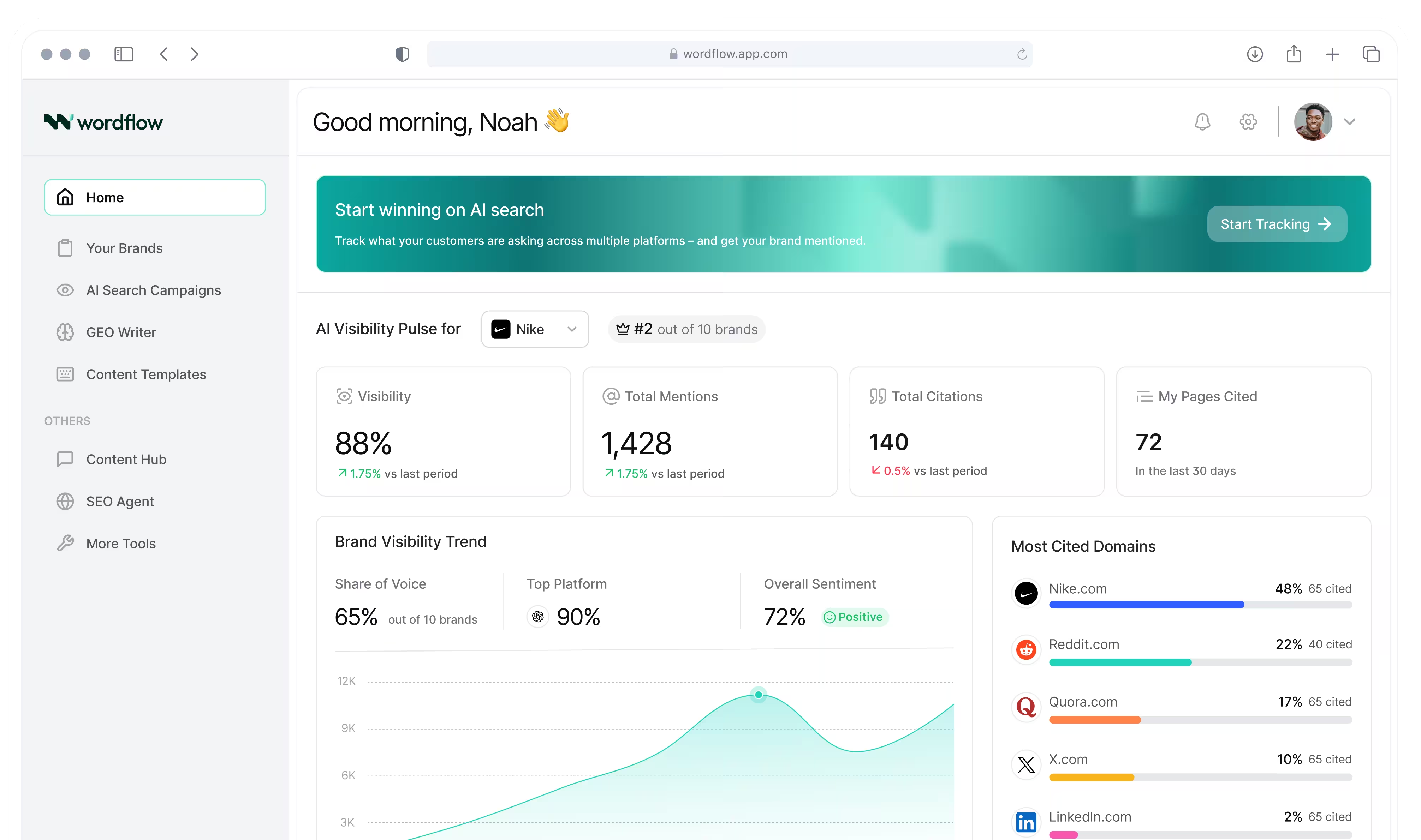
How to track GEO performance with Wordflow
Wordflow is Australia's first AI search and content engineering platform, built to help brands get discovered, accurately represented, and cited in AI-generated answers. It was built around the exact sequence above, so teams can run the whole GEO loop in one place.
Tracking works through live prompt simulations rather than prebuilt datasets. Wordflow submits your tracked prompts directly to each AI engine and captures the real responses those platforms produce, so the data reflects what a buyer would actually see if they asked that question today. Campaigns measure visibility score, total mentions, pages cited, share of voice against competitors, and sentiment across all seven engines: ChatGPT, Claude, Perplexity, Gemini, Google AI Overviews, Grok, and DeepSeek.
Every tracked prompt is categorised by intent, from informational through commercial and problem-solving to transactional. This shows teams where in the buyer journey their visibility breaks down, so content investment goes where it changes outcomes.
Insight then connects to action. Missed prompts and citation gaps flow into the GEO Action Hub as a prioritised work queue, and GEO Writer produces AI-ready content directly from those findings, with Brand Profiles and Compliance Checklists applied at the point of creation. On Pro and Agency plans, Wordflow Insights adds a consolidated weekly report on how accurately and consistently AI represents the brand across all seven engines.
The Free plan tracks ChatGPT with weekly updates, and all paid plans track all seven engines weekly, with a daily tracking add-on available on Pro and Agency.
Turning GEO into a measurable visibility strategy
GEO is not about chasing every AI answer or trying to control how generative engines respond.
It is about understanding the signals that shape those answers, then improving the parts you can influence.
That starts with knowing what AI engines currently say about your brand. From there, teams can identify missed prompts, weak citations, outdated descriptions, competitor gaps, and content opportunities. The goal is to make your brand easier to understand, easier to verify, and easier to cite across the sources AI engines use.
Traditional SEO still matters. Strong content, technical accessibility, authority, and clear site structure all support AI visibility. But GEO adds another layer of measurement. Instead of only asking where you rank, marketers also need to ask whether their brand appears in the answer, how it is described, and which sources are shaping that response.
For teams already investing in search, GEO turns AI visibility from a black box into a workflow. Track the prompts that matter. Measure mentions, citations, sentiment, and share of voice. Fix the gaps across owned and third-party sources. Then keep monitoring as answers change over time.
That is how GEO becomes more than an emerging SEO term. It becomes a practical way to protect and grow brand visibility in AI search.
Not sure where you stand today?
Run a Free Scan. It checks your brand across ChatGPT, Perplexity, and Google AI Overview, no account required, and delivers a personalised AI visibility report to your inbox in about two minutes.
Frequently asked questions
What does GEO stand for in marketing?
GEO stands for Generative Engine Optimisation, the practice of making sure a brand is surfaced, mentioned, and cited in AI-generated answers across large language models and answer engines. In marketing contexts it is unrelated to geographic targeting, which is sometimes abbreviated the same way.
Is GEO the same as AI engine optimisation?
Effectively, yes. AI engine optimisation, AI search optimisation, and generative engine optimisation all describe the same discipline of optimising a brand's presence in AI-generated answers. GEO is the term the industry has largely settled on.
GEO vs SEO – which do I have to choose?
No, and you shouldn't. SEO optimises your position in search results pages, while GEO optimises your presence inside AI-generated answers. They share foundations, and strong content often serves both. The sensible strategy is to run them in parallel and measure each on its own terms.
What is the difference between GEO and AEO?
AEO (Answer Engine Optimisation) targets direct-answer features such as featured snippets and voice results, where one source is selected as the answer. GEO targets generative engines, which compose answers from many sources and cite the brands that informed them. GEO is the broader discipline and largely encompasses AEO's goals.
How long does GEO take to show results?
AI visibility is a trend metric. Expect two to three weeks of tracking before drawing conclusions from the data, and four to eight weeks before content improvements typically show up in tracked answers. Timeframes vary by category and by how established your existing content and citations are.
Read More
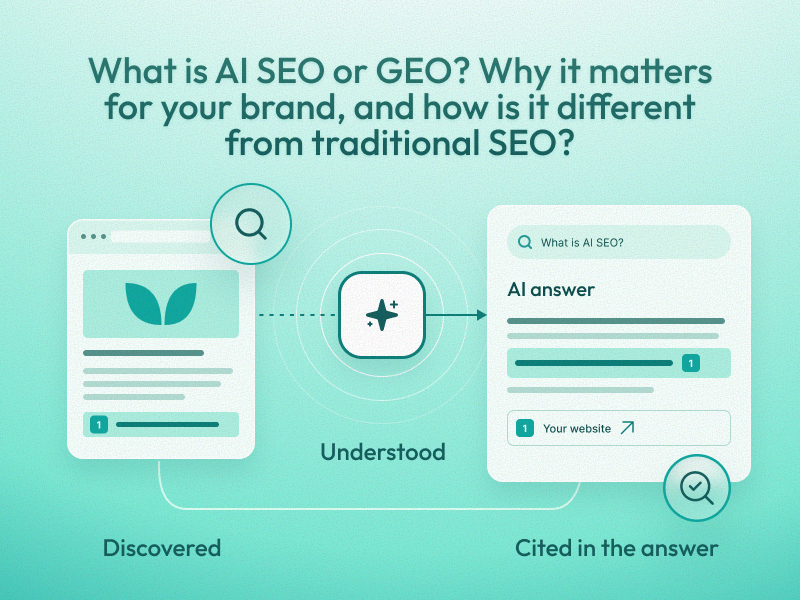
What is AI SEO or GEO? Why it matters for your brand, and how is it different from traditional SEO?
Talks about what AI SEO is, what the different terminologies mean, and how companies could utilise it.
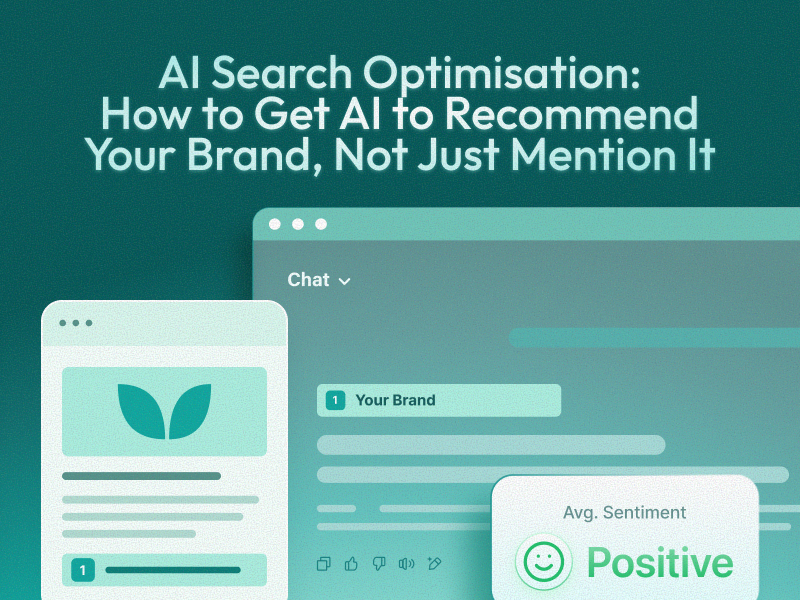
AI Search Optimisation: How to Get AI to Recommend Your Brand, Not Just Mention It
AI can mention your brand and still recommend a competitor. Learn how AI search optimisation, or AI SEO, gets your brand recommended, not just mentioned.
GEO vs. SEO in 2026: what actually changes (and what doesn’t)
Learn how GEO (Generative Engine Optimization) differs from traditional SEO in 2026.
Artifical Intelligence.
Real Results
Ready to transform how you market? Start your unlimited free trial today and experience the advantage Wordflow brings to your results.