January 5, 2026
How AI workflows are changing the way marketing works
Discover how a unified AI workspace transforms fragmented marketing operations into a seamless, efficient, and collaborative environment for better results.
Marketing teams today face two structural pressures at once. They are expected to move faster and produce more content across an expanding set of channels. At the same time, the way audiences discover brands is shifting toward AI-mediated environments.
Search is no longer limited to traditional engines. Increasingly, consumers rely on large language models and AI-powered search systems to research products, compare options, and narrow decisions long before they reach a brand's website. As Generative Engine Optimisation (GEO) takes shape, we posit that visibility will increasingly depend on whether a brand is cited, referenced, and trusted by AI systems rather than simply ranking on a results page.
Despite this shift, our observations convince us that many marketing organisations still operate with fragmented technology stacks. Research, content creation, optimisation, distribution, and analytics live in separate tools with limited integration. The 2025 Gartner Marketing Technology Survey revealed that martech utilisation has dropped to 49%, while Gartner's 2024 Tech Marketing Benchmarks Survey indicated that technology marketers with $100 million or more in annual revenue now use an average of 16 marketing channels, a structure that increases duplication and slows decision-making rather than improving it.
AI workflows tailored to search are emerging as a response to this fragmentation. Rather than adding another point solution, these workflows connect insight, execution, and optimisation into a unified layer of action—shaped by how AI systems surface, cite, and distribute information across generative interfaces.
From channel-led workflows to AI-mediated discovery
Traditional digital marketing workflows evolved around channels.
Teams researched keywords, created content, optimised for search engines, distributed across platforms, and reviewed performance after campaigns launched. This approach assumed discovery happened through linear journeys and human-driven evaluation.
That assumption no longer holds. Evidence increasingly shows that consumers are using AI-powered tools during early-stage research to explore options and narrow choices before visiting brand websites or traditional search results. 68% of APAC business buyers now use generative AI to research vendors; when Google displays AI summaries, users click organic results only 8% of the time versus 15% without AI summaries.
AI-generated answers synthesise information across many sources and prioritise content based on relevance, authority, and consistency. By extension, we see GEO pushing brands toward a more disciplined form of digital marketing, where credibility, topical authority, and alignment across the ecosystem matter more than isolated optimisation tactics.
This shift, we believe, will - or already has - expose a weakness in fragmented stacks. When research, content creation, and optimisation are disconnected, teams struggle to respond quickly enough to changes in how AI systems interpret their category. Workflows address this by embedding AI visibility directly into how marketing work is planned and executed.
The GEO Action Hub as the execution layer for AI search workflows
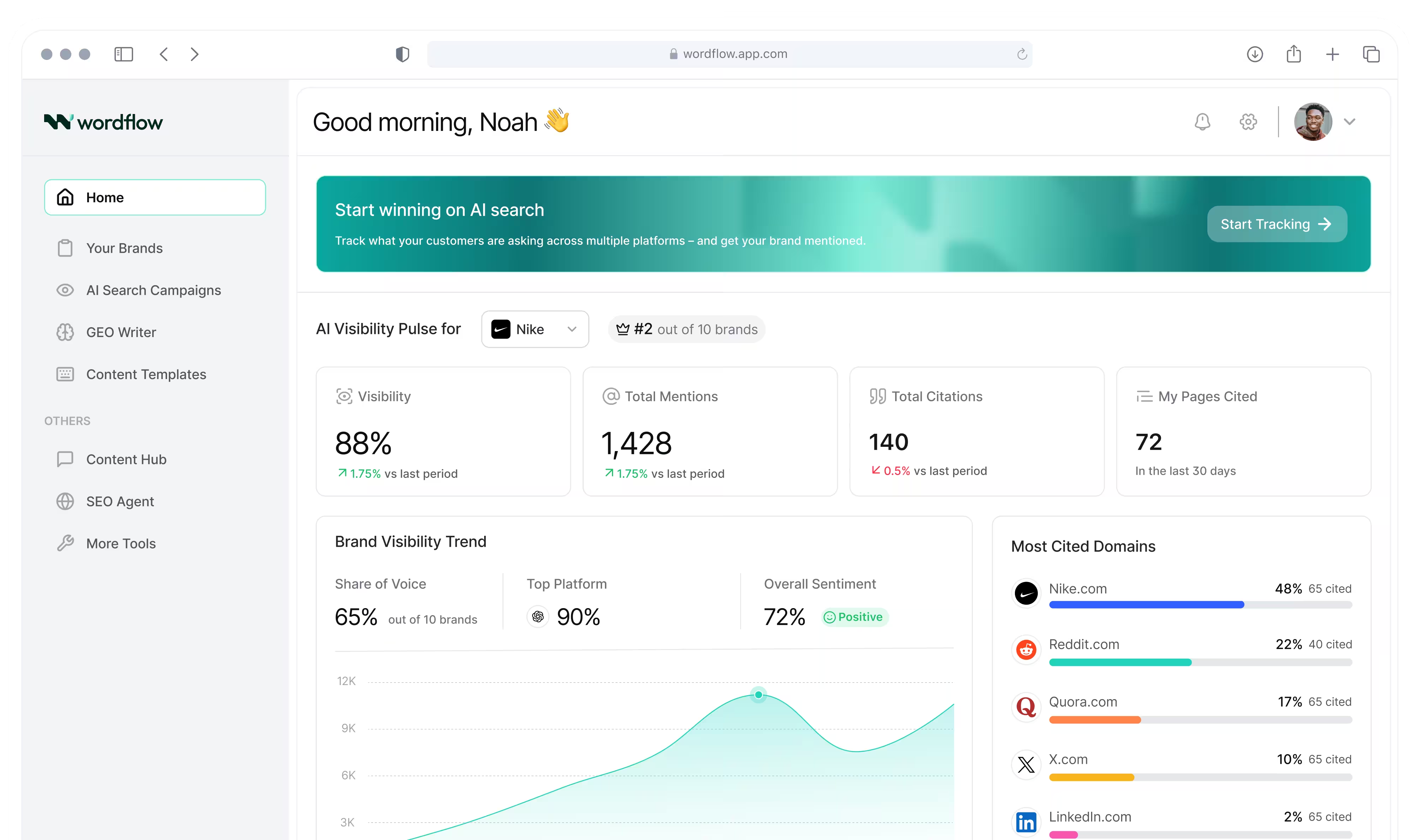
At the centre of effective AI search workflows is an execution layer that translates AI visibility signals into concrete action. In Wordflow, this role is played by the GEO Action Hub.
Rather than treating GEO as a reporting function, our GEO Action Hub connects analysis directly to execution. Teams can see which prompts customers are using, where competitors are being cited, which pages AI systems trust, and where content gaps exist. These insights inform prioritisation, briefs, and content generation within the same system.
This approach reflects a broader industry shift. Earlier this year, Marketing Interactive identified GEO as the next battleground for brands in Asia, particularly in sectors where AI-driven research now shapes purchase decisions earlier than traditional search ever did.
By closing the gap between insight and execution, AI search workflows allow teams to act on AI signals while they still matter. Embedding these signals into content creation from the outset reduces rework and increases the likelihood of being cited in AI-generated answers.
Scaling execution, governance, and collaboration through shared systems
As content volume increases, maintaining consistency becomes harder. Brand voice, audience context, and compliance requirements often degrade as more contributors and agencies get involved.
AI search workflows address this through shared brand profiles and governance frameworks. Voice, tone, audience definitions, and compliance rules are defined once and applied automatically across all outputs. This allows teams to scale production without increasing manual review cycles.
McKinsey research on agentic organisations showed that governance must become real-time, data-driven, and embedded—with continuous monitoring replacing periodic, paper-heavy exercises. Organisations embedding governance directly into AI workflows are significantly more likely to sustain performance improvements from automation initiatives.
Collaboration in this environment is system-level rather than document-centric. Teams collaborate by operating against the same insights, constraints, and execution surfaces. Shared access to GEO insights, tracked prompts, templates, brand profiles, and content repositories enables asynchronous coordination across teams, agencies, and regions.
Practitioners discussing GEO adoption in technical communities consistently point out that the biggest gains come when AI visibility insights, content production, and optimisation live in the same system rather than being handed off between tools.
On top of these anecdotal observations, McKinsey's State of AI research shows that organisations redesigning workflows—the top factor associated with seeing EBIT impact from gen AI—are moving from fragmented tool sets to integrated platforms. Many organisations are still far from that reality today, but AI is indeed steadily being used in multiple functions.
Ultimately, we believe that organisations using shared data and AI-driven workflows are significantly more likely to act on insights quickly enough to influence outcomes rather than simply analyse them after the fact.
A new operating model for marketing in the age of AI
The shift toward AI search workflows represents more than a tooling upgrade. It reflects a change in how marketing work is organised as discovery becomes increasingly mediated by AI systems.
Platforms built around execution layers such as the GEO Action Hub allow teams to move from fragmented stacks to a unified operational system where insight, content, and optimisation reinforce each other. For marketing leaders, the opportunity lies in adopting an operating model designed for influence in AI-driven discovery environments—where being seen, cited, and trusted by AI systems increasingly determines competitive advantage.
Read More
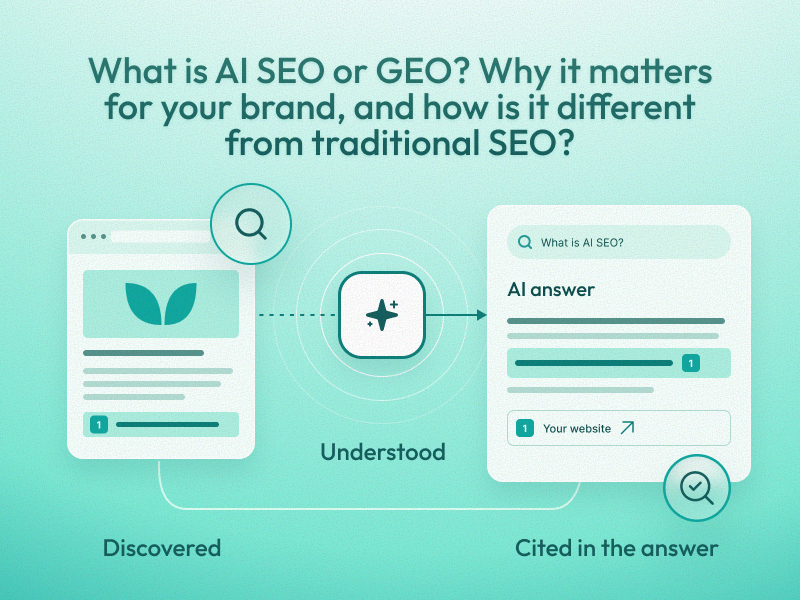
What is AI SEO or GEO? Why it matters for your brand, and how is it different from traditional SEO?
Talks about what AI SEO is, what the different terminologies mean, and how companies could utilise it.
AI Search Optimisation: How to Get AI to Recommend Your Brand, Not Just Mention It
AI can mention your brand and still recommend a competitor. Learn how AI search optimisation, or AI SEO, gets your brand recommended, not just mentioned.
Does AI Know Your Business Exists? How to Navigate AI SEO and What to Fix First
Missing from AI answers? Learn the four reasons AI leaves a brand out, how to find which one applies to you, and where to start with AI SEO.
Artifical Intelligence.
Real Results
Ready to transform how you market? Start your unlimited free trial today and experience the advantage Wordflow brings to your results.