.%20(1).png)
June 4, 2026
The Complete Guide to AI Search Visibility (2026)
Ranking on Google is no longer enough when buyers are discovering brands through AI-generated answers.
Most marketing teams know where they rank on Google. Far fewer know whether they appear in ChatGPT, Gemini, Perplexity, Claude, Grok, DeepSeek, or Google AI Overviews when a buyer asks about their category.
That is the AI search visibility problem.
Search is no longer only a list of ranked links. In more journeys, the first layer of discovery is an AI-generated answer that may mention your brand, cite your content, recommend a competitor, or leave you out entirely.
This guide explains what AI search visibility means, how it differs from traditional SEO, what an AI visibility tool should measure, and how marketers can start improving brand visibility across AI-generated answers.
What Is AI Search Visibility?
AI search visibility is the measure of how often, how accurately, and how positively a brand appears in the answers generated by AI search engines, including ChatGPT, Gemini, Perplexity, Google AI Overviews, Claude, Grok, and DeepSeek.
Unlike traditional SEO, AI search visibility is not measured by one ranking position. There is no single page-one result to track.
Instead, visibility is shaped by several signals:
- Whether your brand is mentioned
- Whether your website is cited
- Whether competitors appear more often
- Whether the AI describes your brand accurately
- Whether the sentiment is positive, neutral, or negative
- Whether your brand is connected to the right category
- Whether your content answers the prompt clearly enough to be used
A brand with strong AI search visibility appears consistently across relevant prompts. It is described accurately, positioned against the right competitors, and cited from credible sources.
By contrast, a brand with weak AI search visibility may still rank well on Google but fail to appear in AI answers. Or it may appear with outdated, vague, or incomplete descriptions.
Why AI Search Visibility Matters in 2026
The buying journey has moved upstream. Buyers are using AI tools before they visit a website, compare vendors, or speak to sales. These AI-generated answers can influence which brands enter consideration, which competitors are compared, and which sources buyers trust.
This shift is already changing search behaviour. A Gartner survey found that 51% of consumers say their research habits have changed because of generative AI. Among them, 71% said they have changed how they phrase queries.
For brands, this changes what visibility means.
AI search visibility helps marketers understand whether their brand is present, cited, and accurately described in the answers shaping buyer decisions.
How AI Search Visibility Differs From Google SEO Rankings
Google SEO and AI search visibility are related, but they measure different things, respond to different inputs, and require different approaches.
A page can rank well and still not be cited by AI systems. Similarly, a brand can have strong organic traffic but a weak presence in AI answers.
This matters because traditional search traffic is increasingly at risk as AI captures decisions earlier in the journey, with estimates suggesting that 20% to 50% of traffic could be affected
A competitor can be mentioned more often because its content is clearer, its positioning is more consistent, or its third-party mentions are stronger.
This is where Generative Engine Optimisation, or GEO, becomes relevant.
GEO focuses on how content is interpreted, summarised, cited, and trusted by AI systems. It does not replace SEO. It extends it. SEO helps content become discoverable. GEO helps content become usable inside AI-generated answers.
Want to understand how GEO differs from traditional SEO? Read more: https://wordflow.ai/post/geo-vs-seo-in-2026-what-actually-changes-and-what-doesnt
The Key Metrics: What AI Search Visibility Actually Measures
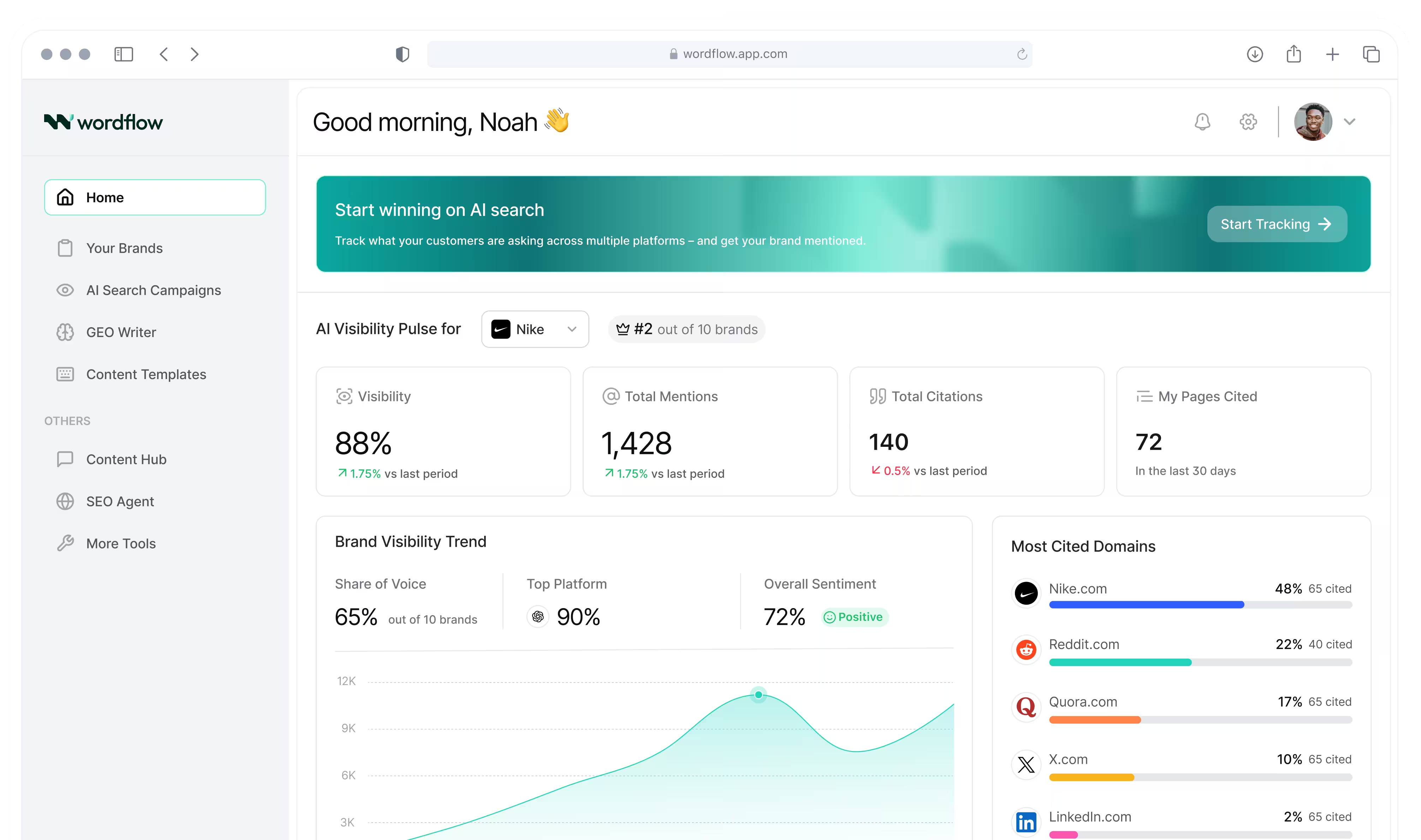
A proper AI search visibility tool tracks more than whether your brand was mentioned. The metrics that matter are:
Visibility Score
Your Visibility Score is the percentage of AI responses across all tracked prompts and platforms in which your brand appears. The calculation is straightforward: mentions divided by total responses analysed.
For example, if Wordflow runs 9 responses (3 platforms × 3 prompts) and your brand appears in 3 of them, your Visibility Score is 33%.
This is your headline number. It is directional and comparable over time, but on its own it does not tell you whether what the AI says about you is good.
Share of Voice
Share of Voice (SOV) measures your brand's presence in AI answers relative to named competitors on the same set of prompts.
If you appear in 40% of responses and your closest competitor appears in 65%, your AI search SOV gap is 25 points. That gap quantifies the opportunity, and tracks whether your content and GEO actions are closing it.
Sentiment
AI answers are not neutral. When an engine describes your product, it may frame it favourably, unfavourably, or with claims that are technically accurate but missing the positioning you would choose yourself.
Sentiment analysis across tracked prompts tells you not just that you were mentioned, but whether the AI is saying positive, negative, or neutral things about your brand.
A brand can have high visibility and poor sentiment, appearing often but being described in ways that undermine purchase consideration.
Citations
Citations track how often a page from your domain is referenced as a source in an AI-generated answer. AI engines like Perplexity display source links openly; others reference sources implicitly.
Citation frequency matters because it shows whether AI engines are treating your content as a reliable source worth referencing.
High citation counts signal that your content structure and topical authority are working. Low citation counts, even alongside decent visibility, suggest you are being mentioned from the AI's training data rather than from current, authoritative content.
Missed Prompts
Missed prompts are queries where competitors appear in AI answers, but your brand does not. These are high-priority gaps because they show where category demand already exists, but your brand is absent.
Tracking missed prompts helps you identify the content and optimisation opportunities most likely to improve your AI search visibility.
How AI Search Engines Decide Which Brands to Surface
AI search engines do not rank pages. They synthesise answers. Understanding how they decide what goes into those answers is the foundation of any serious AI search visibility strategy.
Training data and web crawling
Every major AI engine is trained on a large corpus of web content, then updated through ongoing crawling and retrieval.
Brands that appear frequently in credible, well-structured, publicly accessible content, such as blog posts, comparison sites, review platforms, press coverage, and FAQs, build a stronger presence in that training data.
This is why content breadth and topic authority matter. A brand with a single product page and no surrounding content is less likely to be surfaced than a brand that owns a body of structured, citation-worthy writing on topics relevant to its category.
Entity recognition and structured information
AI engines are better at surfacing brands they can recognise clearly as entities, with consistent naming, a clear description of what they do, and verifiable details across multiple sources.
A brand whose positioning is consistent across its website, its press coverage, its review-site listings, and its social media is easier for AI to accurately represent.
A brand whose descriptions vary across sources, or whose core value proposition is buried in vague copy rather than clear, benefit-led language, is more likely to be described poorly or overlooked.
Authority signals
Backlinks, press citations, review volume, and third-party mentions all feed into the authority signals AI engines use when deciding which brands to surface in competitive queries. High-domain-authority coverage, in particular, correlates with AI citation frequency.
Content structure and extractability
AI engines prefer content they can lift and cite cleanly. That means direct answers at the top of the page, clearly labelled sections, FAQ formatting, and structured comparison tables, not long blocks of prose that bury the core claim several paragraphs down.
A page that answers a question in the first paragraph, then explains and supports it in the following sections, is more likely to be cited than a page structured as a brand story that eventually gets to the point.
What Makes a Brand Visible Across ChatGPT, Gemini, Perplexity and Google AI
Not all AI search engines work the same way.
Each platform has different retrieval logic, update patterns, and source preferences. An AI visibility tool helps marketers track where their brand appears, where it is cited, and where competitors are being surfaced instead.
How to Improve Your AI Search Visibility
Improving AI search visibility is not a single tactic. It is a discipline with several levers, applied consistently over time.
1. Build topic authority with content structured for citation
Write content that answers specific, high-intent questions in your category. These should reflect the questions your buyers are already asking AI tools.
Use clear H2 headings, direct answers, definition blocks, comparison tables, and numbered steps that AI engines can extract and cite easily.
Avoid content that is too brand-forward. Long introductions, generic overviews, and promotional claims are less useful for AI search. AI engines are more likely to cite content that gives a clear, specific answer.
2. Maintain brand consistency across every indexed surface
Your brand description should be consistent across your website, press coverage, review-site profiles, social media bios, and third-party references.
AI engines build their understanding of your brand from patterns across these sources. If your positioning changes from one platform to another, it becomes harder for AI systems to surface your brand accurately.
An AI visibility tool can help identify where your brand is being described inconsistently across AI-generated answers.
3. Earn citations on high-authority external sources
AI engines trust content that other authoritative sources also trust.
Accurate mentions in industry publications, comparison guides, review roundups, and credible editorial coverage can strengthen your third-party signals.
This is the off-page side of GEO. Focus on sources that AI retrieval systems are likely to crawl, such as industry blogs, thought-leadership publications, major press sites, and high-authority review platforms.
4. Fix technical barriers to AI crawling
AI engines rely on crawlers to access and understand content. If your site blocks crawlers, hides important content behind JavaScript, or places key information in non-indexable formats, that content may not appear in AI answers.
Run a technical audit to check whether key pages are accessible in plain HTML, loading correctly, and free from unnecessary crawl restrictions.
5. Track, analyse, and act on visibility data
Improvement without measurement is guesswork. Use AI search visibility tracking tools to monitor Visibility Score, Share of Voice, sentiment, citations, and missed prompts across major AI engines.
Then use that data to prioritise action. Track competitor performance, identify high-value content gaps, and close those gaps with structured, citation-ready content.
How to Track and Measure AI Search Visibility With Wordflow
Wordflow is Australia's first AI search and content engineering platform, built to help brands track their visibility across 7 AI engines, understand what AI says about them, and produce the content that improves it.
The platform runs on a five-step framework:
- See It: track where your brand appears (or doesn't) across ChatGPT, Claude, Perplexity, Gemini, Google AI Overviews, Grok, and DeepSeek.
- Know It: prioritise which gaps and opportunities matter most, using Share of Voice, sentiment, and missed-prompt data.
- Write It: generate AI-optimised content directly from those insights using GEO Writer, with brand voice and compliance guardrails applied at the point of creation.
- Check It: keep every piece on-brand and compliant before it ships, via Brand Profiles, Audience Personas, and Compliance Checklists.
- Ship It: move from insight to published, AI-ready content in hours, not weeks.
What the platform tracks
Wordflow's AI Search Campaigns run prompts against all 7 engines and return:
- Visibility Score: the percentage of responses in which your brand appears
- Share of Voice: your presence relative to named competitors on the same prompts
- Sentiment Analysis: whether AI describes your brand positively, negatively, or neutrally
- My Pages Cited: how many times your content is referenced as a source
- Missed Prompts: queries where competitors appear but you don't
- Platform Coverage: broken down engine by engine, so you know exactly where you're visible and where you're not
Wordflow Insights: your weekly AI perception audit
Wordflow Insights (available on Pro and Agency plans) is a consolidated weekly report that goes beyond raw visibility to track the accuracy and consistency of how AI represents your brand.
It surfaces four things:
- Whether AI engines recognise your brand at all
- How accurately AI describes your business
- Where you are gaining or losing ground against competitors across the seven engines
- Where different AI platforms agree or disagree on your brand's positioning
The distinction matters: a brand can have reasonable visibility and still be misrepresented — described as serving the wrong audience, missing its key differentiator, or positioned in a way that does not reflect its current product or market. Wordflow Insights catches that before it compounds.
The GEO Action Hub: turning insight into content
The GEO Action Hub converts your visibility findings into a prioritised work queue: on-page content opportunities, off-page citation targets, and technical blockers.
This is the gap Wordflow is designed to close: most AI writers focus on creative copywriting, while many AI visibility tools stop at tracking and analysis. Wordflow connects the two by helping users discover content opportunities and create AI-ready content in one flow.
Not sure where to start?
The Wordflow Free Scan runs a no-account-required visibility scan across ChatGPT, Perplexity, and Google AI Overview. Enter your brand name, industry, and target market, and a personalised AI visibility report lands in your inbox in approximately 2 minutes.
The scan tells you where you stand. Wordflow shows you how to get ahead.
Run your free AI visibility scan
Or, if you're ready to track all 7 engines and start closing visibility gaps systematically, a 14-day free trial activates on any paid plan.
Read More
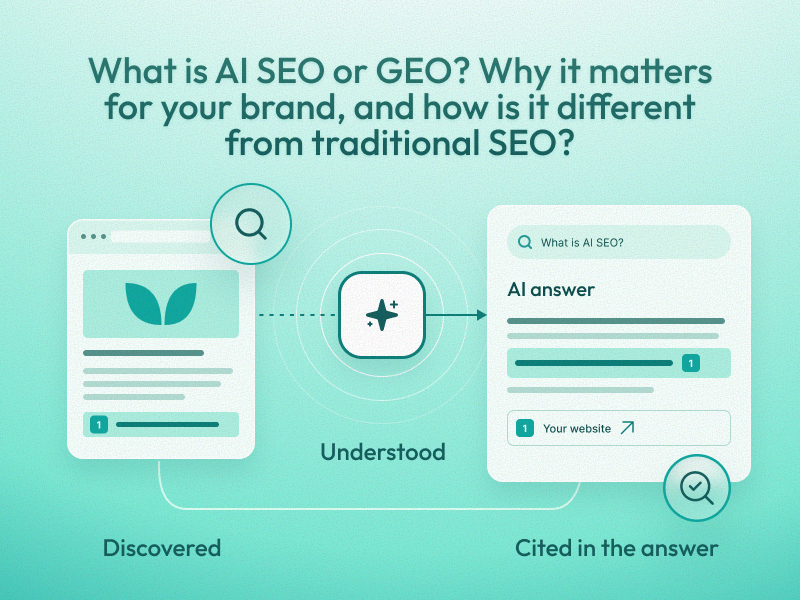
What is AI SEO or GEO? Why it matters for your brand, and how is it different from traditional SEO?
Talks about what AI SEO is, what the different terminologies mean, and how companies could utilise it.
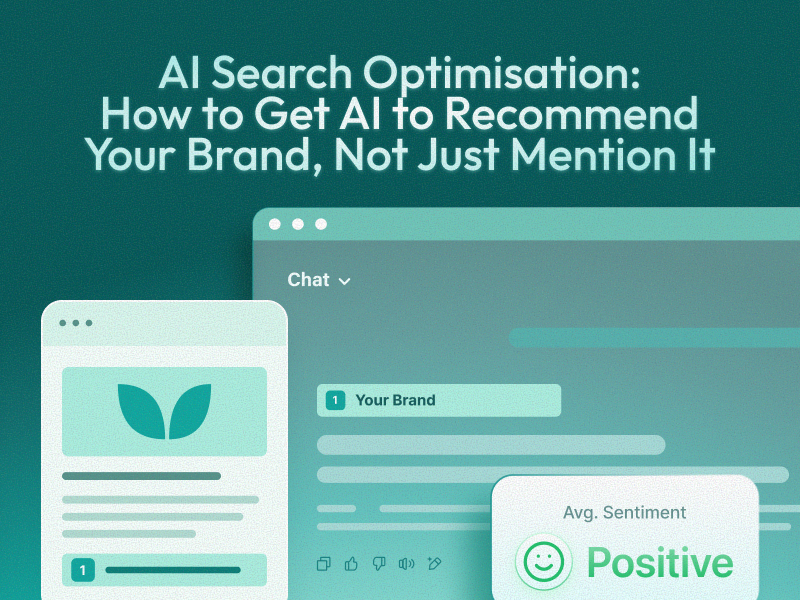
AI Search Optimisation: How to Get AI to Recommend Your Brand, Not Just Mention It
AI can mention your brand and still recommend a competitor. Learn how AI search optimisation, or AI SEO, gets your brand recommended, not just mentioned.
How Generative AI Is Rewriting the Rules of Search
Explore the shift from SEO to GEO and how to stay visible in a world of AI-generated search responses.
Artifical Intelligence.
Real Results
Ready to transform how you market? Start your unlimited free trial today and experience the advantage Wordflow brings to your results.