February 4, 2026
Why Finance (and Other YMYL) Gets Fewer AI Overviews and What to Build Instead
AI answers face tighter rules in highly regulated industries. Here's what we think you can do as a marketer in these fields.
Finance SEO now lives inside a more selective interface. AI Overviews are essentially compressed, single responses, and the cost of an inaccurate or overconfident answer is significantly higher in “your money or your life” (YMYL) topics like financial advice.
This sits inside a broader shift from rankings to AI search visibility, where what matters is whether your brand shows up in the response and how it is framed.
This selectivity changes what you should optimize for. The challenge is to stay visible across all customer intents - including intents where AI Overviews appear inconsistently. In finance, that comes down to one practice: separating prompts that invite safe synthesis from prompts that demand task completion.
Why finance triggers fewer AI Overviews
In finance, AI Overviews are least dependable where users care most: prompts that signal decision intent.
These are queries that lean closer to committing to a product or action, and they often ask for outputs, live numbers, eligibility implications, or recommendations that can materially affect someone’s financial situation. When a summary is wrong in these contexts, the downside is immediate and tangible.
This interacts with an additional pattern found in industry analyses: AI Overviews skew heavily toward informational intent, especially in earlier phases of rollout, and they show less consistently on query types that are local, time-sensitive, or execution-heavy. Finance decision intent often carries those properties by default. “What is APR” is explanatory. “APR calculator” is execution. “Mortgage rates today” is freshness-dependent. “Best savings account” is a shortlist query where small differences matter.
All this creates additional constraints on what types of customer intents that AI Overviews can consistently satisfy. Naturally, these constraints also shape how SEO practitioners in regulated industries decide what to focus on.
What to build for finance AI search visibility
Given these constraints, we posit that marketers in finance and other highly regulated industries need two classes of assets because search demand splits into two distinct patterns: synthesis and education assets, and task completion assets.
Synthesis and education
This refers to pages that are designed to be summarized safely and repeatedly. Their objective is to standardize category language so AI systems reuse your definitions and criteria rather than borrowing a competitor’s framing.
Examples include:
- APR vs APY
- How compound interest works
- What affects your credit score
- Fixed vs variable interest rates
- How to compare home loan packages
- What fees matter in an investment platform
These assets only work if credibility is built into the structure. Education pages need clear authorship, conservative claims, and sources that hold up under scrutiny. Google’s quality rater guidance and YMYL framing emphasize scrutiny and trust for high-stakes topics.
For a breakdown on how to identify content gaps in AI answers, see our earlier post.
Task completion
This refers to pages that satisfy customer intents that require computation, freshness, or customer inputs. The objective is action completion with transparent logic.
Examples include:
- An APR or APY converter that shows assumptions and input ranges
- A mortgage amortization calculator that exposes methodology and edge cases
- A debt payoff planner that explains what changes the timeline
- A take-home pay estimator with clear tax year logic
- An eligibility checker that states limitations explicitly
- A rates page with visible timestamps and a clear update methodology
The best task completion assets require making their operating logic legible: show assumptions, clarify limitations and state clearly what affects the output.
How to apply this without repeating old mistakes
To put this into action, we recommend tracking what customers are asking across AI platforms, and then clustering prompts by intent: synthesis prompts typically ask for definitions, comparisons, tradeoffs, or evaluation criteria, while task prompts usually ask for calculators, current rates, eligibility checks, or application processes.
Once you’ve set up initial prompt clusters, you’ll need to measure outputs in the environments that your customers use. Remember: developer APIs can diverge from the consumer surfaces users actually see. In regulated categories, surface details such as citations, disclaimers, and formatting materially affect trust and action.
If you need a primer on AI search visibility, including prompt clustering and visibility tracking, take a look at our earlier post on how to measure your brand’s presence inside AI conversations.
AI Overviews will keep shifting. In regulated categories, the boundary between synthesis-friendly prompts and task-heavy prompts moves as the system’s confidence in sourcing, reliability, and safety handling changes.
What won’t change is how you show up in finance-related AI Overviews: treat synthesis content as the reusable “explanation layer” behind summaries, and treat tool-led destinations as the actionable layer that turns curiosity into a decision.
Read More
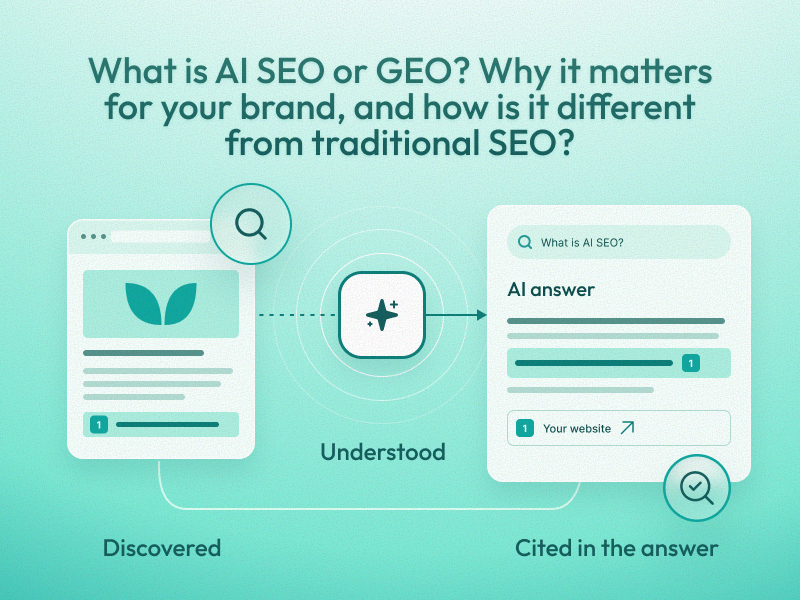
What is AI SEO or GEO? Why it matters for your brand, and how is it different from traditional SEO?
Talks about what AI SEO is, what the different terminologies mean, and how companies could utilise it.

How Generative AI Is Rewriting the Rules of Search
Explore the shift from SEO to GEO and how to stay visible in a world of AI-generated search responses.
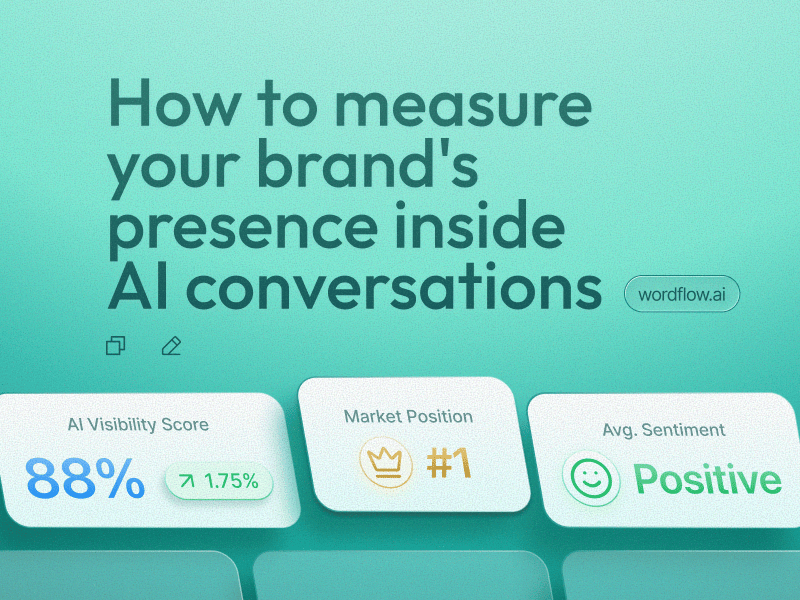
How to measure your brand's presence inside AI conversations
AI visibility doesn't have to be a guessing game. Here's what the data tells us so far.
Artifical Intelligence.
Real Results
Ready to transform how you market? Start your unlimited free trial today and experience the advantage Wordflow brings to your results.