September 16, 2026
Ranking on Google but Getting Fewer Clicks? How to Adapt to Zero-Click Search
Learn what zero click search is, why it's becoming more common, and how brands can build visibility inside AI generated answers, plus the metrics that matter once clicks aren't the whole story
Ranking on Google but Getting Fewer Clicks? How to Adapt to Zero-Click Search
For years, SEO followed a fairly simple formula: rank higher, earn more clicks and bring more people to your website.
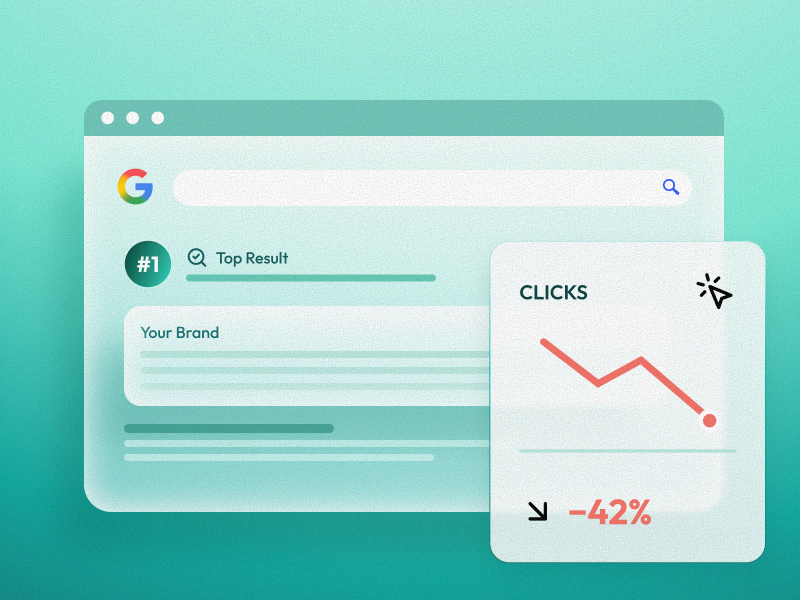
Now, that journey is not quite so predictable. Your page might appear near the top of Google, but that does not always mean someone will visit it. More often, searchers can find what they need without leaving the results page.
A 2025 Pew Research Center study shows just how much behaviour is changing. Users clicked a traditional search result on 8% of visits when an AI summary appeared, compared with 15% when there was no summary. Only 1% of visits led to a click on a source cited in the AI summary.
That does not mean SEO is no longer valuable. It means the search results page is increasingly becoming the destination. Featured snippets, knowledge panels, local listings and AI-generated answers can all answer a question before the user reaches a website.
For marketers, this changes what it means to succeed in search. Ranking still matters, but so does making sure your brand remains visible, credible and accurately represented, even when the search ends without a click.
What is a zero-click search?
A zero-click search happens when someone finds what they need without clicking through to a website. The answer appears directly on the search results page, so the search begins and ends in the same place.
You have probably completed plenty of zero-click searches without thinking about it. Google may show the answer through:
- AI Overviews
- Featured snippets
- Knowledge panels
- People Also Ask results
- Local packs and map results
- Definitions, calculations and other instant answers
- Product, image and video carousels
Checking the weather, converting a currency or looking up a quick definition can all happen without leaving Google. These familiar no-click searches existed long before generative AI.
What has changed is how much search platforms can now answer. AI search can summarise a topic, compare several options and bring together information from different sources. Tools such as ChatGPT, Gemini, Claude and Perplexity can even support much of the research journey within one conversation.
A question answered inside an AI assistant is not technically the same as a search that ends on a Google results page. From a marketer’s perspective, however, the effect is similar. The user receives the information, but the source is not guaranteed a visit.
Why zero-click searches are becoming more common
Search platforms want to make finding information as quick and easy as possible. Instead of asking users to open several pages and piece together an answer, they can now do more of that work within the search experience.
Several shifts are making zero-click searches more common.
Search results offer more complete answers
Organic links now compete for attention with many other search features. Before users reach the first standard result, they might see a definition, product information, local business listings, related questions or an AI-generated summary.
Each feature gives them another chance to find what they need without clicking.
AI can handle more detailed questions
Earlier search features worked best for quick facts. Generative AI can respond to longer questions, understand more context and bring several parts of an answer together.
Google explains that AI Overviews and AI Mode may use query fan-out. This means the system runs several related searches across different subtopics and sources before building its response. A question that once required five separate searches may now be answered in one place.
Search is becoming more conversational
Traditional keywords tend to be short and broad. AI prompts can include a person’s situation, priorities and limitations.
Instead of searching for “email marketing software”, someone might ask, “Which email marketing platform is suitable for a small ecommerce team that needs automation but does not have a developer?”
That extra context helps the AI provide a more useful response. If the answer is good enough, the user may continue asking follow-up questions instead of opening several websites.
People expect answers straight away
Once people become used to receiving an instant summary, comparison or recommendation, visiting another page can feel unnecessary. They are more likely to click when they want greater detail, need to verify something or are ready to take action.
Zero-click search is therefore bigger than any single Google feature. It reflects a wider change in how people look for information and how search platforms deliver it.
Why strong rankings may not bring the same traffic
A high ranking still puts your page in a valuable position. The difference is that traditional organic results now receive a smaller share of the user’s attention.
An AI Overview may appear above the organic listings. A featured snippet might answer the question immediately. A knowledge panel could provide the key facts. Your page may still hold the same position, but fewer people need to visit it.
This can make performance harder to read. If you look only at rankings, everything may appear stable. If you look only at traffic, you might assume the content is losing relevance. Neither metric shows what has changed on the results page.
Before blaming zero-click search for a drop in organic traffic, check:
- Whether rankings and impressions are still stable
- Whether click-through rates have fallen for the same queries
- Whether AI Overviews or other search features now appear
- Whether the intent behind the search has changed
- Whether seasonality, algorithm updates or technical issues affected traffic
- Whether people are finding the brand through other channels
Not every traffic decline is caused by AI search. Looking at the wider picture can stop teams from rewriting or removing useful content when the real change is simply how Google presents the answer.
What visibility looks like when nobody clicks
Zero-click does not have to mean zero value. Someone may never visit your website, but they can still see your brand, read information attributed to it or find it recommended alongside competitors.
The opportunity shifts from owning every visit to influencing the answer.
In a zero-click journey, visibility might mean:
- Your brand appears in an AI-generated comparison
- Your content is cited as a source
- Your definition earns a featured snippet
- Your business appears in a local result
- Your product information is included in a search feature
- Your research or expert opinion helps shape the answer
These moments can build recognition before a website visit happens. Someone may encounter the same brand across several searches, ask an AI tool a few follow-up questions and visit the website only when they are ready to compare prices, request a demo or buy.
That does not mean every mention makes up for a lost click. Visibility matters only when it reaches the right audience and represents the brand accurately. Marketers still need to connect it with branded searches, qualified visits, conversions and pipeline wherever possible.
This is the thinking behind zero-click marketing. The goal is not to stop caring about traffic. It is to recognise that discovery and influence can happen before a visit ever appears in analytics.
How to build brand visibility inside AI-generated answers
If more research happens inside search results and AI responses, content needs to do more than rank. It also needs to be accessible, easy to understand and useful enough to include in an answer.
Answer real questions directly
A broad article may rank for a general keyword, but AI users often ask detailed questions. Look at what customers want to know at each stage of their research, then answer those questions clearly.
Use descriptive headings and sections that can make sense on their own. Avoid vague lines such as “our solution makes this easier”. When it is relevant, name the product, audience, capability and use case so the meaning is clear.
Give AI systems something worth citing
Generic summaries rarely give a search system a strong reason to choose one source over another. Original research, expert comments, practical examples, clear definitions, useful comparisons and properly sourced statistics can make a page more valuable.
The point is not to add numbers or quotations simply to make the content look authoritative. Every piece of evidence should answer a question or support a meaningful claim.
Make the connection to your brand clear
Helpful educational content does not automatically create brand visibility. AI systems also need to understand what the company does, who it serves and why it belongs in the conversation.
Keep important brand descriptions consistent across your homepage, About page, product pages, author profiles and credible third-party sources. Mixed categories, outdated product details or conflicting market information can make your brand harder to understand and represent accurately.
Keep the technical basics in place
The foundations of SEO still matter. Search systems need to be able to crawl, index and process your content before they can use it.
Google says a page must be indexed and eligible to appear with a snippet before it can be shown as a supporting link in AI Overviews or AI Mode. It also recommends keeping important information in text, matching structured data with the visible page copy and maintaining accurate business details.
Different AI platforms may rely on different crawlers and sources. A proper AI search visibility audit should therefore check access beyond Google too.
Build credible signals beyond your website
AI-generated answers do not rely only on what a company says about itself. Editorial coverage, expert contributions, industry directories, reviews and partner pages can all reinforce what a brand is known for.
This is not about creating as many mentions as possible. It is about building consistent, credible evidence in the places your audience and the systems researching the topic are likely to find it.
How to adapt SEO and content for a zero-click journey
Zero-click SEO is not another checklist of quick tricks. It means planning content that is useful within the answer while still giving people a good reason to visit your website.
Set the right goal for each search
Not every query has the same potential to drive traffic.
A simple factual search may be answered completely on the results page. For that query, earning the visible definition or citation may be the most realistic goal. A detailed comparison, calculator, template, report or product evaluation is harder to complete without visiting the source, so those topics can still create stronger click opportunities.
When reviewing your keywords and prompts, ask:
- Can this question be answered in one or two sentences?
- Which search features appear for it?
- Is the person looking for a fact, an explanation or help making a decision?
- What would make visiting the website worthwhile?
- Is there a natural reason for the brand to be part of the answer?
These questions help teams avoid judging every piece of content by the same measure.
Answer first, then offer more
It can be tempting to hold back the useful part of an answer to encourage a click. In practice, that often creates a weaker experience for readers and search systems.
Give people a clear answer first, then offer something that takes them further. That might be:
- Original data or a downloadable report
- A detailed methodology
- An interactive tool or calculator
- A template or implementation guide
- A product demonstration
- A case study with measurable results
- A comparison covering several decision criteria
The immediate answer earns visibility. The added depth gives people a reason to click.
Cover the topic, not just one keyword
AI prompts often bring several needs together. A useful topic cluster can cover the main subject, common follow-up questions, comparisons, use cases and buying criteria.
Connect these resources with clear internal links. This makes it easier for people and search systems to explore the topic, while giving individual passages more opportunities to support different prompts.
Make the next step feel natural
Someone who clicks after reading an AI summary may already be further into their research. The page they land on should reflect that.
For example, a person researching comparisons probably needs more than a generic homepage. Guide them towards the next useful step, such as a detailed feature page, free scan, relevant case study or trial.
Which metrics should you track beyond organic traffic?
Rankings, clicks and organic sessions are still useful. They simply cannot show the full impact of search content on their own.
A more complete measurement framework looks at four areas.
Search performance
Continue tracking:
- Rankings
- Search impressions
- Click-through rate
- Organic sessions
- Conversions from organic traffic
- Visibility in featured snippets and other search features
Pay particular attention to queries where rankings or impressions remain stable while clicks fall. This can be a sign that more of the journey is happening directly on the results page.
AI visibility
Track whether your brand appears for the prompts and across the AI engines that matter to your audience. Useful metrics include:
- Mention rate
- Visibility Score
- Share of Voice
- Citation frequency
- Prompt coverage
- Competitor presence
These metrics show whether your brand is part of the answer, even when nobody visits the website.
Ranking is only one part of the visibility story. Learn how mentions, citations, sentiment and Share of Voice shape your presence in The Complete Guide to AI Search Visibility in 2026
Accuracy and sentiment
Being mentioned is not always enough. An AI answer may describe your brand incorrectly, use outdated details or place it in the wrong category.
Look at what AI tools are saying, not only whether your name appears. Track the accuracy, context and sentiment of each mention, then identify where your content or brand information needs to be clearer.
Downstream business signals
Zero-click visibility may influence actions that happen later and are not attributed to the original search. Monitor:
- Growth in branded searches
- Direct traffic
- AI referral traffic
- Assisted conversions
- Demo requests or trials
- Qualified pipeline and revenue
No single metric can prove that an AI mention caused a conversion. Together, however, these signals provide a much clearer picture than traffic alone.
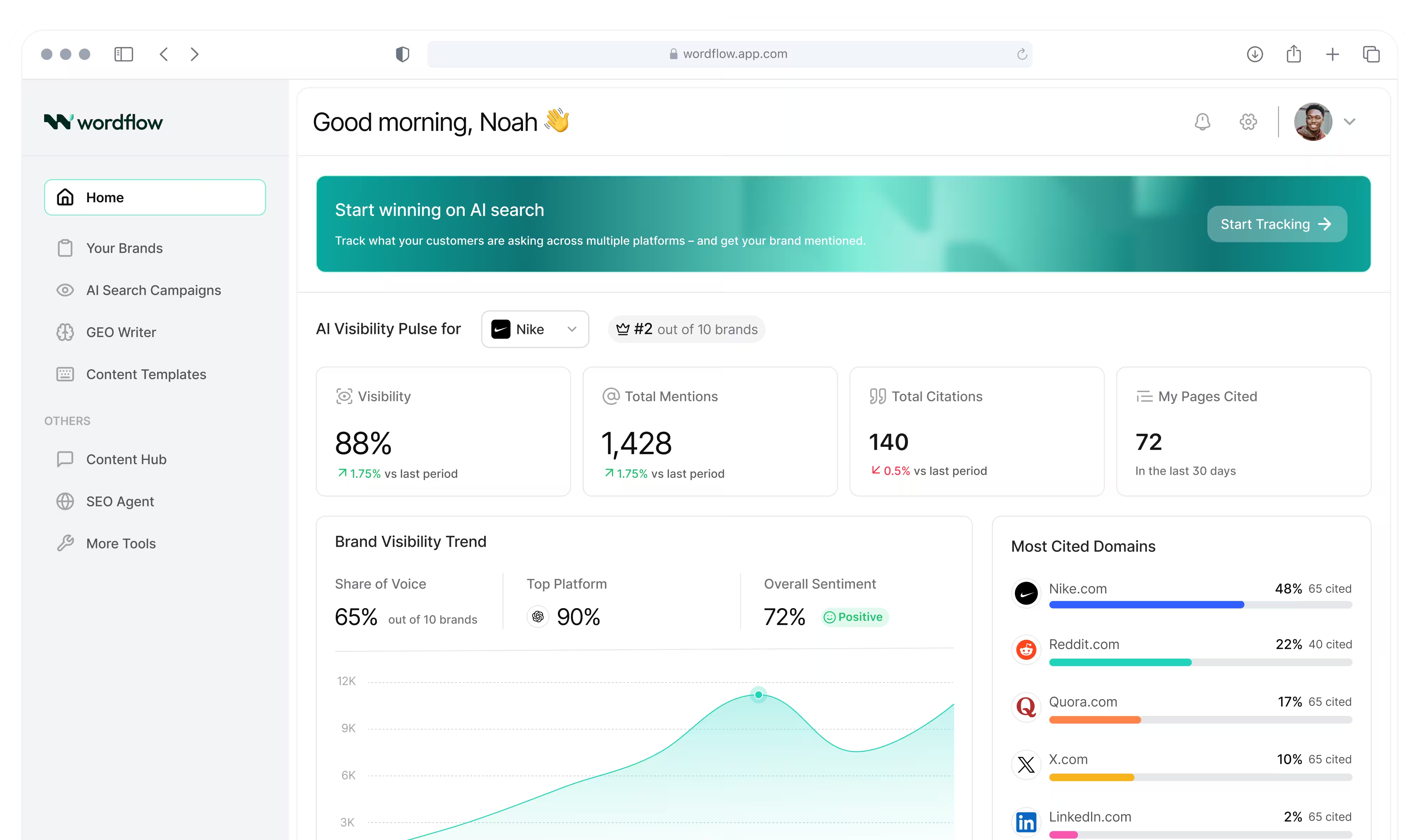
How Wordflow measures visibility across seven AI engines
Google Search Console and analytics platforms can show impressions, clicks and website behaviour. They cannot show every prompt where an AI system mentioned your brand without sending a visitor to your site.
Wordflow measures this missing layer by tracking brand visibility across ChatGPT, Claude, Perplexity, Gemini, Google AI Overviews, Grok and DeepSeek.
The platform runs live prompt simulations and records the answers produced. It then shows:
- Where your brand appears
- Which competitors are mentioned instead
- Which sources are cited
- How your Share of Voice changes
- Whether brand sentiment and descriptions are accurate
- Which prompts and citations represent visibility gaps
This makes it possible to compare traditional search performance with AI search visibility rather than assuming one represents the other.
For example, a page may still rank well and receive fewer clicks while the brand becomes more visible across AI answers. Another page may lose traffic and remain absent from AI responses, signalling a more serious discovery problem. These situations may look similar in analytics, but they require different actions.
Wordflow's AI search monitoring helps teams see where their brands appear, how they are represented and which content opportunities to prioritise.
A click is no longer the whole story
Zero-click search does not make rankings less valuable. It changes what can happen between being seen and being visited. A user may find an answer, discover several brands, compare their options and narrow down their choices before clicking anything.
That is why rankings and traffic still matter, but they only tell part of the story. Your content needs to attract qualified visitors while also being clear, useful and well supported enough to appear in search features and AI-generated answers.
The goal is not to win back every click. It is to keep your brand visible and useful wherever the search journey happens, then give people a meaningful reason to choose you when they are ready to take the next step.
Want to know whether your brand is part of the answer? Try Wordflow to track your mentions, citations, sentiment and share of voice across seven AI engines.
Read More
How Generative AI Is Rewriting the Rules of Search
Explore the shift from SEO to GEO and how to stay visible in a world of AI-generated search responses.
How to measure your brand's presence inside AI conversations
AI visibility doesn't have to be a guessing game. Here's what the data tells us so far.
How to Spot Content Gaps in AI Answers
AI search visibility changes content gaps from missing keywords and pages to missing inclusion, positioning, proof, and decision-ready answers that AI can confidently summarize.
Artifical Intelligence.
Real Results
Ready to transform how you market? Start your unlimited free trial today and experience the advantage Wordflow brings to your results.